






Search

Educational Episodes: Hyperconverged Infrastructure (HCI)

Featured blog posts

Trending topics you shouldn't miss

All blog posts

Every post, every insight, all in one place
View:
Volodymyr Perishko
  • Volodymyr Perishko
  • February 24, 2024

Setting up a Windows Failover Cluster for a home lab

Setting up a failover cluster is a thing that admins must do. To build such cluster, you need to configure shared storage. And, there are a lot of ways to do that. Today, I’d like to discuss how to build a Windows Failover Cluster using a virtual SAN solution (StarWind Virtual SAN) as a shared storage provider.
Read more
Vladan Seget
  • Vladan Seget
  • February 20, 2024

How to Enable and Configure vMotion Application Notification Feature for a VM in vSphere

vSphere 8 now offers the vMotion Application Notification feature, aimed at improving application migrations. Interested in the technical aspects?
Read more
Volodymyr Perishko
  • Volodymyr Perishko
  • February 14, 2024

Can SQL Server Failover Cluster Instance run on S2D twice as fast as SQL Server Availability Groups on Storage Spaces? Part 1: Studying AG performance

Some time ago, I published here comparison of SQL Server Failover Cluster Instances (FCI) and SQL Server Availability Group (AG) performance while having them run on top of StarWind Virtual SAN (https://www.starwindsoftware.com/blog/hyper-v/can-sql-server-failover-cluster-instance-run-twice-fast-sql-server-basic-availability-groups-2-node-cluster-part-2-studying-fci-performance/). Today, I measure SQL Server AG performance on Storage Spaces. The next part sheds light on SQL Server FCI performance on S2D. Can I squeeze two times more TPM out of SQL Server FCI on S2D than SQL Server AG can provide on Storage Spaces?
Read more
Vladan Seget
  • Vladan Seget
  • February 13, 2024

VMware vSphere Replication 8.8 – What’s New and Why You Need It

Whether you’re migrating workloads or fortifying your disaster recovery (DR) strategy, the latest 8.8 release of VMware vSphere Replication has you covered.
Read more
Volodymyr Perishko
  • Volodymyr Perishko
  • February 9, 2024

Can SQL Server Failover Cluster Instances run on S2D twice as fast as SQL Server Availability Groups on Storage Spaces? Part 2: Studying FCI performance

It is the second part of my research on SQL Server Availability Groups (AG) and SQL Server Failover Cluster Instances (FCI) performance. Before, I measured SQL Server AG performance on Storage Spaces (https://www.starwindsoftware.com/blog/hyper-v/can-sql-server-failover-cluster-instance-run-s2d-twice-fast-sql-server-availability-groups-storage-spaces-part-1-studying-ag-performance/). Today, I study the performance of SQL Server FCI on S2D, trying to prove that this thing can run 2 times faster than SQL Server AG on Storage Spaces
Read more
Orest Lesyuk
  • Orest Lesyuk
  • February 8, 2024

Replacing legacy physical tapes with StarWind VTL for IBM i. Part 1: StarWind VTL configuration

Tired of wrestling with legacy tape backups? Explore how StarWind Virtual Tape Library (VTL) for IBM i is modernizing data storage, offering a more efficient alternative to traditional methods.
Read more
Paolo Valsecchi
  • Paolo Valsecchi
  • February 6, 2024

FSLogix configuration in VMware Horizon

Dive into the world of seamless user profile management with FSLogix in VMware Horizon! Learn how to provide a persistent area for machines like Instant Clones while managing user profiles efficiently.
Read more
Diana Abo Harmouch
  • Diana Abo-Harmouch
  • February 1, 2024

Thick and Thin Provisioning: What’s the performance difference in context of VMware vSphere 

Thick and Thin VM disks have been around for ages, yet there’s always been some controversy regarding which method is better and whether there’s any performance difference. Discover the key differences and features of Thick and Thin disks, and choose the most optimal space allocation method for your environment.
Read more
Volodymyr Perishko
  • Volodymyr Perishko
  • January 31, 2024

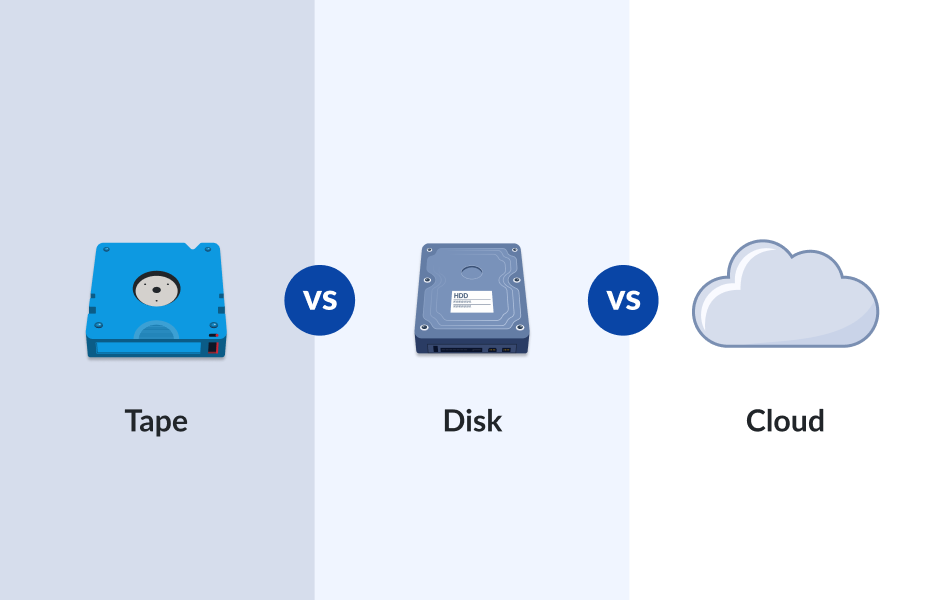
SAN? NAS? Public cloud? Let’s pick the secondary storage

  Some time ago, I wrote an article about backup storage media. Today, I’d like to talk about secondary storage. Before I move on, I want to clarify what I mean by “secondary storage” here, just to make sure that we are on the same page. Secondary storage is the storage where the actively used data resides. It can be both some local storage like SAN or NAS, or some public cloud hot tier. Well, it’s absolutely true that you can use disk arrays too, but let’s think of them today just as NAS-like servers packed with many disks, ok? That’s entirely up to you “which side you are on”, and there’s no “one-size-fits-all” solution. NAS, SAN, and public cloud storage… Whatever secondary storage you choose, it has own pros and cons. I discuss them in this article.
Read more