






Search

Educational Episodes: Hyperconverged Infrastructure (HCI)

Featured blog posts

Trending topics you shouldn't miss

All blog posts

Every post, every insight, all in one place
View:
Ivan Ischenko
  • Ivan Ischenko
  • March 14, 2025

Proxmox vs. XCP-ng: A Deep Dive into Open-Source Virtualization

Virtualization is evolving, and open-source solutions are gaining ground. We take a close look at Proxmox VE and XCPng in our latest guide, comparing their architecture, features, performance, storage options, and support cost. Which one is right for your business?
Read more
Brandon Lee
  • Brandon Lee
  • March 12, 2025

Microsoft Pluton Security Processor: New enhancements

Microsoft continues to refine the Pluton security processor with new updates aimed at strengthening system protection. Curious about the latest improvements? 
Read more
Vladan Seget
  • Vladan Seget
  • March 11, 2025

Boost your productivity with Microsoft Windows 2025 Dev Drive

If you’re running Windows Server 2025 or Windows 11, you can create a Dev Drive – an optimized volume designed for development workloads. Find out how to set it up and boost your build performance.
Read more
Dmytro Malynka
  • Dmytro Malynka
  • March 5, 2025

Failover and Failback: What are the differences?

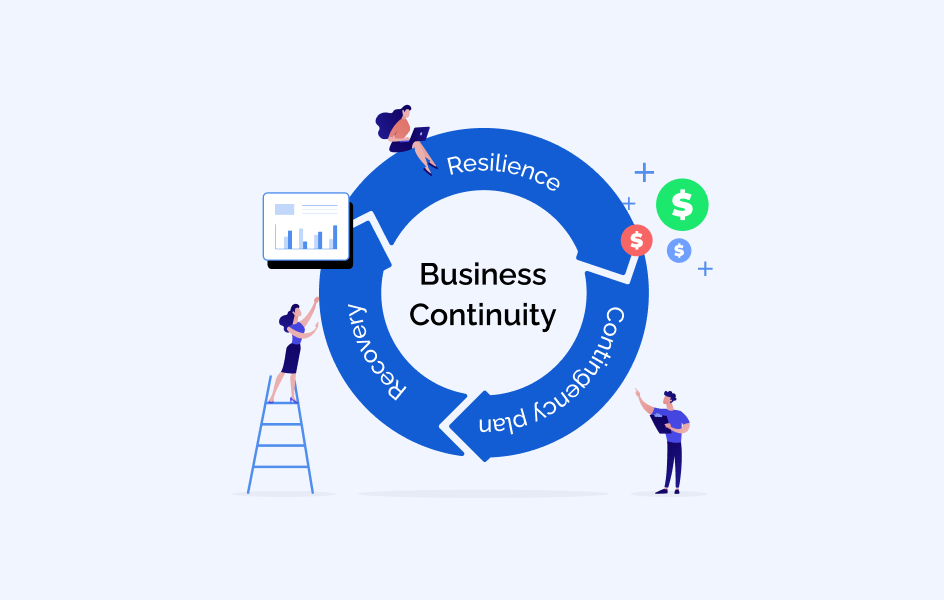
Downtime can be a nightmare for any business. Understanding failover and failback mechanisms is key to a strong disaster recovery plan. In this article, we explore expert insights on ensuring business continuity and rapid recovery.
Read more
Alex Samoylenko
  • Alex Samoylenko
  • March 4, 2025

What’s Inside Broadcom’s Emulex Secure Fibre Channel HBA

Quantum computing is evolving fast, and traditional encryption won’t be enough to keep your data safe. Broadcom ’s Emulex Secure Fibre Channel HBA integrates post-quantum cryptography (PQC) to ensure end-to-end encryption without performance trade-offs. Learn how it protects your critical infrastructure in our latest article.
Read more
Volodymyr Perishko
  • Volodymyr Perishko
  • February 27, 2025

Node Fairness in Hyper-V: Practical Load Balancing for Clusters

How does it work? Being triggered, the Node Fairness service determines the current workload on the cluster hosts. If needed, it automatically migrates VMs to the less loaded host. After the start, the cluster service checks the host for two factors: If the average host CPU load exceeds the tolerated threshold If the average host memory utilization is higher than the tolerated threshold In case either of these criteria is met, the VM gets live migrated to the less loaded host. Neither guest system nor services do experience any downtime.
Read more
Karim Buzdar
  • Karim Buzdar
  • February 26, 2025

Migrate VMs from Hyper-V to Proxmox VE Using PowerShell

Moving to Proxmox VE but don’t want to leave your Hyper V VMs behind? With PowerShell, you can easily export your VMs, transfer, and convert them to the right format.
Read more
Vladan Seget
  • Vladan Seget
  • February 25, 2025

Windows Server 2025 and FREE Hyper-V Dream

Microsoft has officially phased out the free version of Hyper V with Windows Server 2025. This change marks a major shift for IT pros and organizations that rely on cost-effective virtualization. What does this mean for your infrastructure and budget?
Read more
Vitalii Feshchenko
  • Vitalii Feshchenko
  • February 25, 2025

NIC Load Balancing on ESXi: Recovery & Real-World Best Practices

NIC teaming in ESXi increases vSwitch bandwidth and provides load balancing during network or hardware failures. If the load-balancing policy does not match the network equipment, connectivity issues may occur, but they can be resolved through the ESXi console or out-of-band management.
Read more