
This list below is no mean to be an exhaustive. Yes, there are literally dozens of viable alternatives to VMware which has become too expensive for vast majority of users. The question is not when to migrate elsewhere, but which platform to chose and will my existing backup infrastructure be compatible. It is fairly often that businesses have the hands tightened by compliances, legal rules etc. so they have to keep their backup platform for ever (or at least until the vendor supports it) to be able to recover archived data.
Many businesses still have not decided where will they go and most likely, after the end of VMware support, they will keep running aging vSphere with less and less security. This is very dangerous path because we live in a cyberwar era and your data is the gold the hackers want to steal.
So, without further wait, let’s have a look at our FREE virtualization platform selection. But before that, we’ll talk about special case, which is Microsoft.
The Risk of “All Eggs in One Basket” and the VMware Exodus
Yes, the Broadcom’s acquisition of VMware started an avalanche of interest in other virtualization platforms. The reasons behind this are the transition to a subscription-only model, the retirement of perpetual licenses, and the bundling of products into VMware Cloud Foundation (VCF). Those reasons have forced organizations to reconsider their dependency on a single vendor.
While Microsoft Hyper-V is often cited as the immediate alternative due to its inclusion in Windows Server licenses, relying on it exclusively presents a strategic risk: putting “all your eggs in the same basket.”
- The Microsoft Monoculture: Migrating from VMware to Hyper-V simply swaps one proprietary vendor lock-in for another. You remain dependent on a single ecosystem for licensing, support, and roadmap decisions.
- Licensing Complexity: While Hyper-V appears “free” with Windows Server Datacenter editions, the true cost emerges when factoring in System Center for management, Azure Arc for hybrid consistency, and the per-core licensing model that can escalate quickly for high-density hosts.
- Strategic Fragility: As seen with Broadcom, vendor priorities can shift overnight. Diversifying your infrastructure stack with open-source or multi-vendor solutions mitigates the risk of future licensing shocks and provides leverage in negotiations.
Lesser-Known Alternatives
Beyond the mainstream options, platforms and niche players like CubeCOS (for GPU/AI workloads) and HPE Morpheus VM Essentials (for hybrid management) also offer specialized value but may lack the broad community support of the open-source leaders. Especially VM Essentials from HPE might be interesting for come businesses already using HP hardware.
The top 10 list
The following top 10 free alternatives focus on open-core or fully open-source platforms where the software is free, updates are free (well, Proxmox says their software is free, but they do charge for access to their enterprise, e.g. “stable” repo), and you only pay for optional support.
By having an option to use free software with support, the savings can be spread to train your IT staff and reinvest into new hardware. It avoids vendor lock-in, and ensures long-term sustainability.
1. Proxmox VE
Proxmox is very popular platform.
- Architecture: Debian-based Linux integrating KVM (VMs) and LXC (containers).
- Container Support: Excellent. Native LXC support for lightweight system containers. For modern apps, it excels at running Kubernetes clusters inside KVM VMs, with CSI drivers to expose Ceph storage directly to pods.
- Backup Support:
- Veeam: Yes (Native). Fully supported since Veeam v12.2 (2024) with agentless backups, CBT (incremental), and instant recovery. Note: LXC containers are not supported by Veeam, only KVM VMs.
- Nakivo: Yes (Native). Full agentless support added in Nakivo v11. Certified by Proxmox.
- Best For: SMEs needing a balance of legacy LXC containers, modern K8s clusters, and enterprise backup integration.
Proxmox download here.
Our article about migration to Proxmox or XCP-NG is here.
2. XCP-ng by Vates (Fr).
- Architecture: Community-driven fork of Citrix Hypervisor based on the Xen hypervisor.
- Container Support: Good (VM-First). No native container engine. Uses RunX to run containers as lightweight, isolated Xen VMs (VM-level security for containers). Kubernetes runs in VMs with Xen Orchestra CSI for storage.
- Backup Support:
- Veeam: Yes (Native). Officially supported as of Q2 2026 (Veeam v12.3+). Provides agentless backups and incremental support.
- Nakivo: Limited. Primarily relies on agent-based backups inside the VM or generic drivers; no deep native Xen Orchestra integration yet.
- Best For: Security-conscious environments needing strong isolation for multi-tenant container workloads and native Veeam support.
Link for download XCP-NG hypervisor is here.
My article on StarWind blog is here.
3. SimpleVM (by Thinware)
New and easy to use, simple hypervisor, with a nice UI. SimpleVM is built directly on KVM with a hardened operating system base that maintains strong compatibility with RHEL ecosystems. This choice provides excellent driver support, security features (including SELinux), and long-term stability.
- Architecture: Lightweight, KVM-based Type-1 hypervisor built on a hardened RHEL-compatible kernel.
- Container Support: Basic (VM-Only). No native container runtime. You deploy modern apps by creating Linux VMs and installing Docker/Kubernetes manually. Relies on standard KVM performance.
- Backup Support:
- Veeam: Yes (Generic KVM). Supported via Veeam’s generic Linux KVM plugin. No branded plugin yet, but fully functional for KVM VMs.
- Nakivo: Yes (Generic KVM). Supported via Nakivo’s standard KVM module.
- Best For: Organizations wanting a simple “ESXi-like” experience who already own Veeam/Nakivo licenses and want to use them immediately via generic KVM support.
Download SimpleVM here.
4. oVirt
- Architecture: Centralized management platform for KVM hosts (upstream for Red Hat Virtualization).
- Container Support: Moderate. No native container runtime. Historically tightly integrated with OpenShift (OKD), providing flexvolume drivers for dynamic storage provisioning for K8s clusters running on oVirt VMs.
- Backup Support:
- Veeam: No (Native). No dedicated plugin. Requires agent-based backups inside VMs.
- Nakivo: No (Native). Requires agent-based backups.
- Alternative: Vinchin Backup & Recovery is the industry standard for native, agentless oVirt support.
- Best For: Enterprises running Red Hat OpenShift who need dynamic storage provisioning but must use Vinchin or agents for backup.
Download oVirt here.
5. Oracle Linux Virtualization Manager (OLVM)
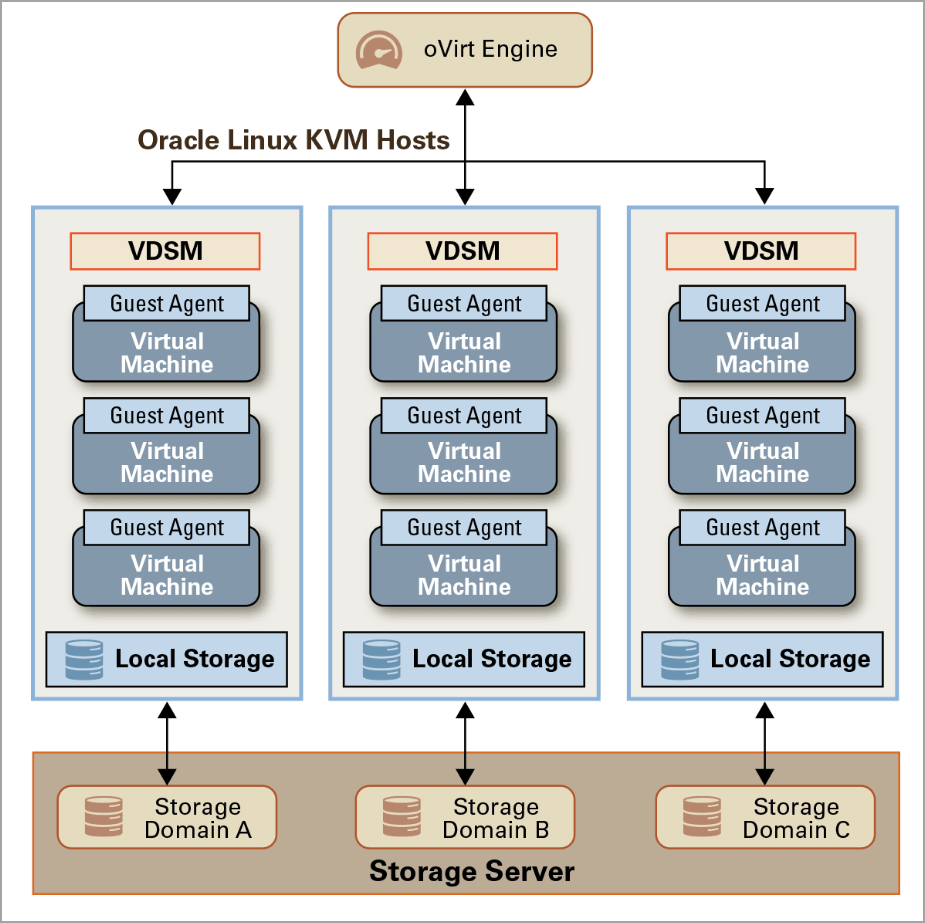
- Architecture: Based on oVirt and KVM, optimized for Oracle Linux.
- Container Support: Moderate. Optimized for running Oracle Container Runtime and Kubernetes on Oracle Linux VMs. Integrates well with Oracle’s ecosystem for containerized DBs.
- Backup Support:
- Veeam: No (Native). No dedicated plugin. Requires agent-based backups.
- Nakivo: No (Native). Requires agent-based backups.
- Alternative: Vinchin Backup & Recovery explicitly supports OLVM with agentless backups.
- Best For: Shops standardizing on Oracle Linux for both database and container workloads, willing to use Vinchin or agents for backup.
6. Harvester (SUSE Virtualization)
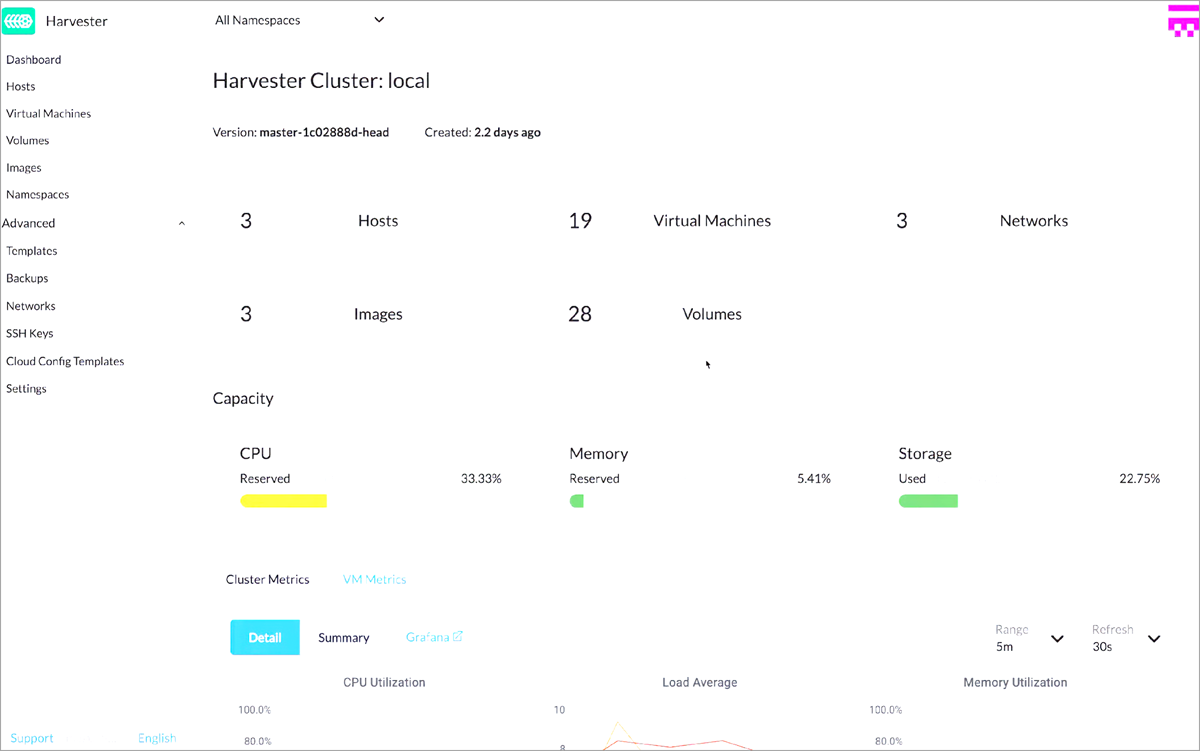
- Architecture: Modern Hyperconverged Infrastructure (HCI) built on KubeVirt, Longhorn, and Rancher.
- Container Support: Native/Best-in-Class. Built on Kubernetes. Treats VMs as pods. Manages VMs and Containers in the same interface (Rancher). Uses Longhorn for cloud-native storage shared by both.
- Backup Support:
- Veeam: Yes (Via Kasten). Standard Veeam B&R does not connect directly. Veeam Kasten provides native support for Harvester (KubeVirt) to backup VMs as Kubernetes objects.
- Nakivo: No. No dedicated KubeVirt/Harvester connector.
- Best For: Cloud-native teams wanting a single platform for both legacy VMs and modern microservices, using Veeam Kasten for protection.
7. Apache CloudStack
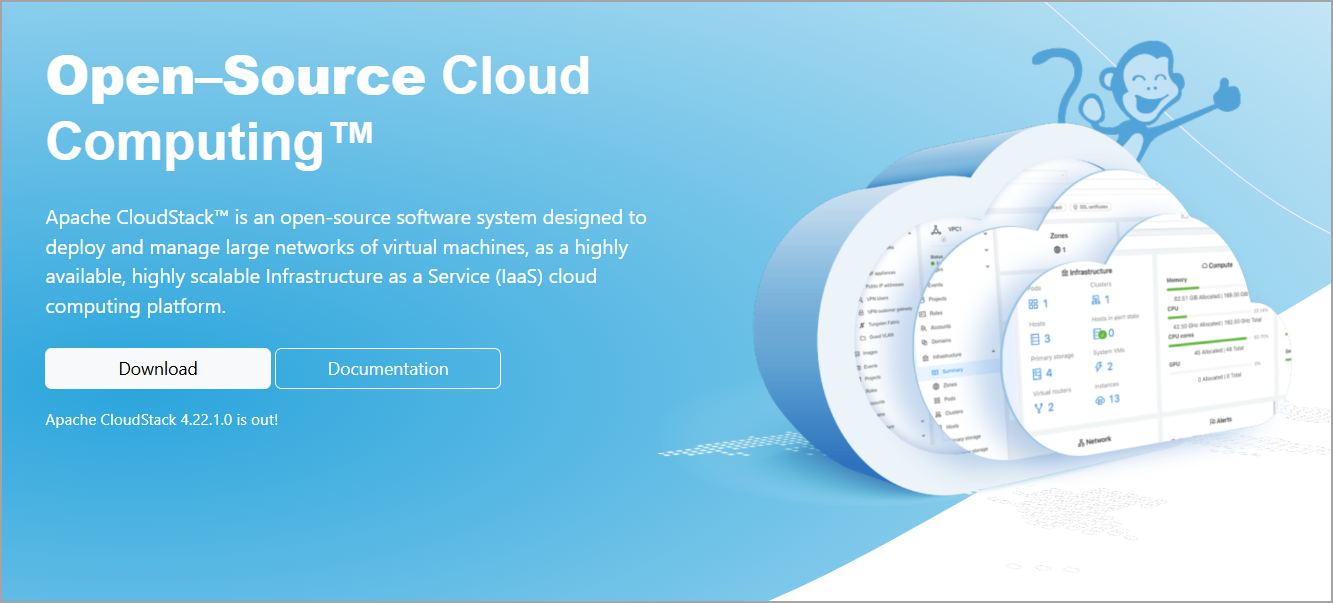
- Architecture: Full Infrastructure-as-a-Service (IaaS) platform orchestrating pools of hosts (KVM, Xen, VMware).
- Container Support: Orchestration. Does not run containers directly; provisions massive clusters of VMs to host containers. Can automate deployment of hundreds of K8s worker nodes.
- Backup Support:
- Veeam: No (Direct). Must backup underlying hypervisors (KVM/Xen) directly or use agents inside VMs.
- Nakivo: No (Direct). Same as Veeam.
- Best For: Service Providers offering “Kubernetes as a Service” who manage backup at the hypervisor or guest level.
8. OpenStack
- Architecture: Modular collection of services (Nova, Neutron, Cinder) primarily using KVM.
- Container Support: Integrated (Magnum). Includes Magnum, a native service that deploys and manages Kubernetes clusters as first-class resources via API. Deeply integrated with OpenStack Networking and Storage.
- Backup Support:
- Veeam: Yes (Via Plugin). Dedicated Veeam Backup for OpenStack plugin integrates with the API to backup Cinder volumes and VMs.
- Nakivo: Limited. Supports some environments but often requires specific configuration or agents.
- Best For: Large clouds needing an API-driven “Container Infrastructure Service” alongside traditional VMs.
9. QEMU (with libvirt)
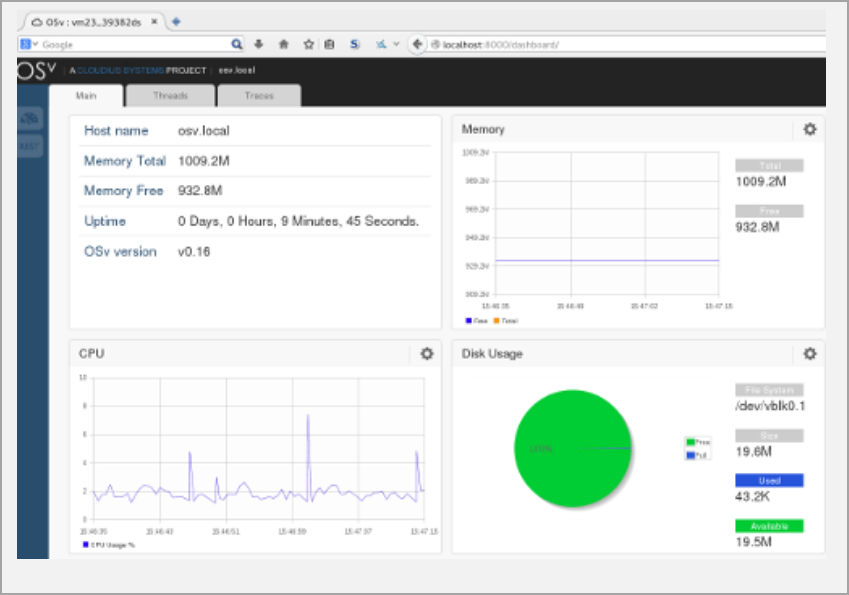
- Architecture: Generic emulator and virtualizer, often the backend for KVM.
- Container Support: Manual. No native management. Commonly used with KubeVirt (to run VMs inside K8s) or as the backend for custom K8s deployments via scripts.
- Backup Support:
- Veeam: Yes (Generic KVM). Supported via the generic Linux KVM plugin (requires libvirt access).
- Nakivo: Yes (Generic KVM). Supported via Nakivo’s KVM module.
- Best For: Developers building custom platform engineering tools or embedded edge devices.
10. Xen Project (Standalone)
- Architecture: The original Type-1 hypervisor.
- Container Support: High Security. Ideal for running Kata Containers or RunX, where every container is a distinct Xen micro-VM. Provides highest isolation for untrusted workloads.
- Backup Support:
- Veeam: No (Direct). Veeam supports XCP-ng and Citrix Hypervisor, but not the raw upstream Xen Project without a management stack.
- Nakivo: No (Direct). Similar limitations; requires a supported distribution like XCP-ng.
- Best For: High-security environments and public cloud providers needing micro-VM isolation.
Final Recommendation
- For “Drop-in” VMware Replacement: Proxmox VE or SimpleVM. Both offer native or generic support for Veeam and Nakivo, ensuring your existing backup strategy works immediately. Proxmox adds native LXC containers; SimpleVM adds simplicity.
- For Cloud-Native/Kubernetes Focus: Harvester. It unifies VMs and containers natively, though apparently you must adopt Veeam Kasten for enterprise backup (for containers).
- For Oracle/Red Hat Shops: OLVM or oVirt. Be prepared to use Vinchin for agentless backups or rely on agents inside the VMs for Veeam/Nakivo.
Final Words
The list is not exhaustive because there are more hypervisors, clones and alternatives. But hey, if you try every single one from this list you will get my respect. The change from VMware is not easy, but is necessary if you don’t want to pay what you will never use (the whole VMware bundles). If VMware would bring back option of individual products instead of bundles, the situation would not be like it is.
Each company is different. While one needs and already heavily invested into NSX and/or needs some advanced features that the alternatives does not offer, then they probably must just stay where they are and pay the price.
FAQ
What are some free alternatives to VMware?
The article covers 10 options: Proxmox VE, XCP-ng, SimpleVM, oVirt, Oracle Linux Virtualization Manager, Harvester, Apache CloudStack, OpenStack, QEMU with libvirt, and Xen Project. They range from traditional hypervisors to cloud and Kubernetes-focused platforms.
Is Proxmox VE a free VMware alternative?
Yes. Proxmox VE is a Debian-based virtualization platform that combines KVM for virtual machines with LXC for containers. The software can be used for free, with paid enterprise repository access and support available separately.
Which VMware alternatives support Veeam?
According to the article, support differs by platform. Proxmox VE has native Veeam support, XCP-ng is listed with native support, SimpleVM and QEMU/libvirt can use generic KVM integration, Harvester works through Veeam Kasten, and OpenStack can use a dedicated Veeam integration. Other platforms may require guest agents or alternative backup products.
Which VMware alternative is suitable for Kubernetes environments?
Harvester is focused on cloud-native environments and combines KubeVirt, Longhorn, and Rancher. It manages virtual machines and containers through the same Kubernetes-based environment. OpenStack can also deploy and manage Kubernetes clusters through Magnum.
What is a simple VMware alternative for traditional VM workloads?
The article highlights Proxmox VE and Thinware SimpleVM as options for organizations looking for a more direct VMware replacement. Proxmox adds LXC container support, whereas SimpleVM focuses on a simpler, ESXi-like KVM experience.
Which VMware alternative is best suited to Oracle environments?
Oracle Linux Virtualization Manager is based on oVirt and KVM and is optimized for Oracle Linux. The article positions it for organizations standardizing on Oracle Linux for database and container workloads.
Do all VMware alternatives support containers natively?
No. Container capabilities vary considerably. Proxmox VE includes native LXC support, Harvester is built around Kubernetes, and platforms such as SimpleVM, oVirt, and QEMU/libvirt rely more heavily on VMs or external container tooling.
What should organizations check before migrating from VMware?
The article places particular focus on existing backup compatibility, container requirements, ecosystem dependencies, and advanced VMware features already in use. Some organizations may still need VMware when they depend heavily on features that alternatives do not provide.