Search
Join the Technical Preview Program
See how NVMe-oF removes iSCSI
bottlenecks in your HCI
The Best Hyperconverged
Infrastructure
(HCI) for Enterprise
ROBO, SMB & Edge
The Best Virtual SAN
for Enterprise ROBO, SMB & Edge

Add Address Space to a Peered Virtual Network (Preview)

  • October 21, 2021
  • 3 min read
Cloud and Virtualization Architect and Microsoft MVP. Florent specializes in public, private, and hybrid cloud ecosystems. An MCSE in Private Cloud, he provides technical leadership in Cloud and Datacenter Management. Florent delivers high-authority insights on Azure deployments, virtualization strategy, and optimizing enterprise-scale cloud infrastructure.

Microsoft released a new great feature, a few days ago, that allows us to add new address spaces into a VNet that has peered VNet:

How to re-size Azure virtual networks that are peered—now in preview | Azure Blog and Updates | Microsoft Azure

Before this feature, the only way to add a new address space to a subnet was to remove all VNet peering, add the new address space and redo peering. It was very difficult to do during the day because of the downtime that disabling the VNet peering caused.

Now, thanks to this feature, in 2 clicks you will be able to add a new address space, without interrupting your network.

Without this feature, here is the problem, if I try to add a new address space:
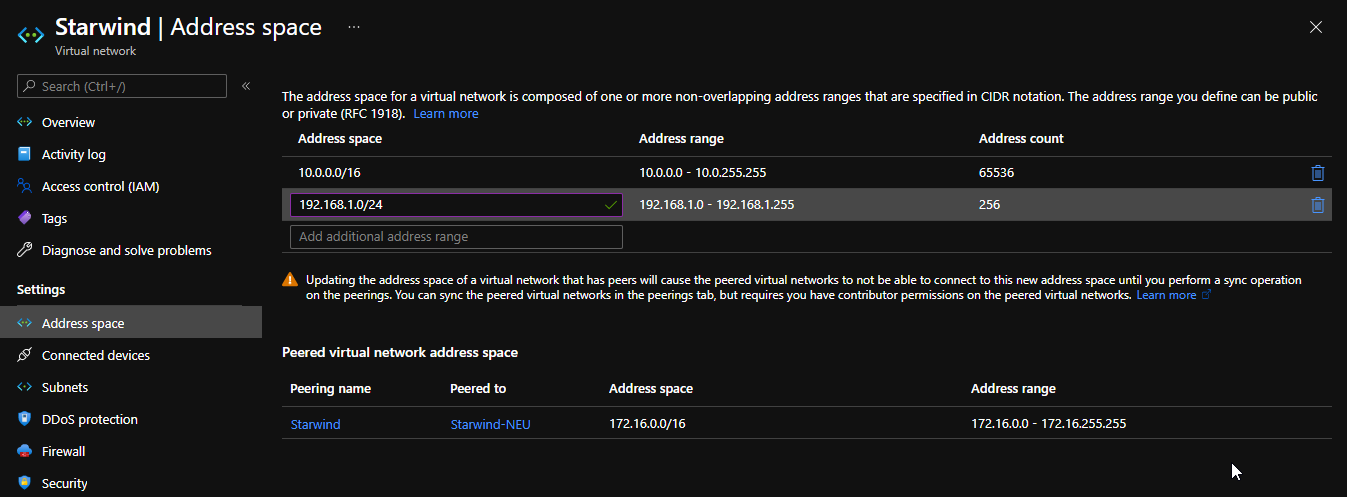
Address space

Error

You need to register the provider to have this new feature working. Don’t forget to re-register your Microsoft Network resource provider.

Go in your subscription, in Preview features and search for AllowUpdateAddressSpaceInPeeredVnets. Register it:
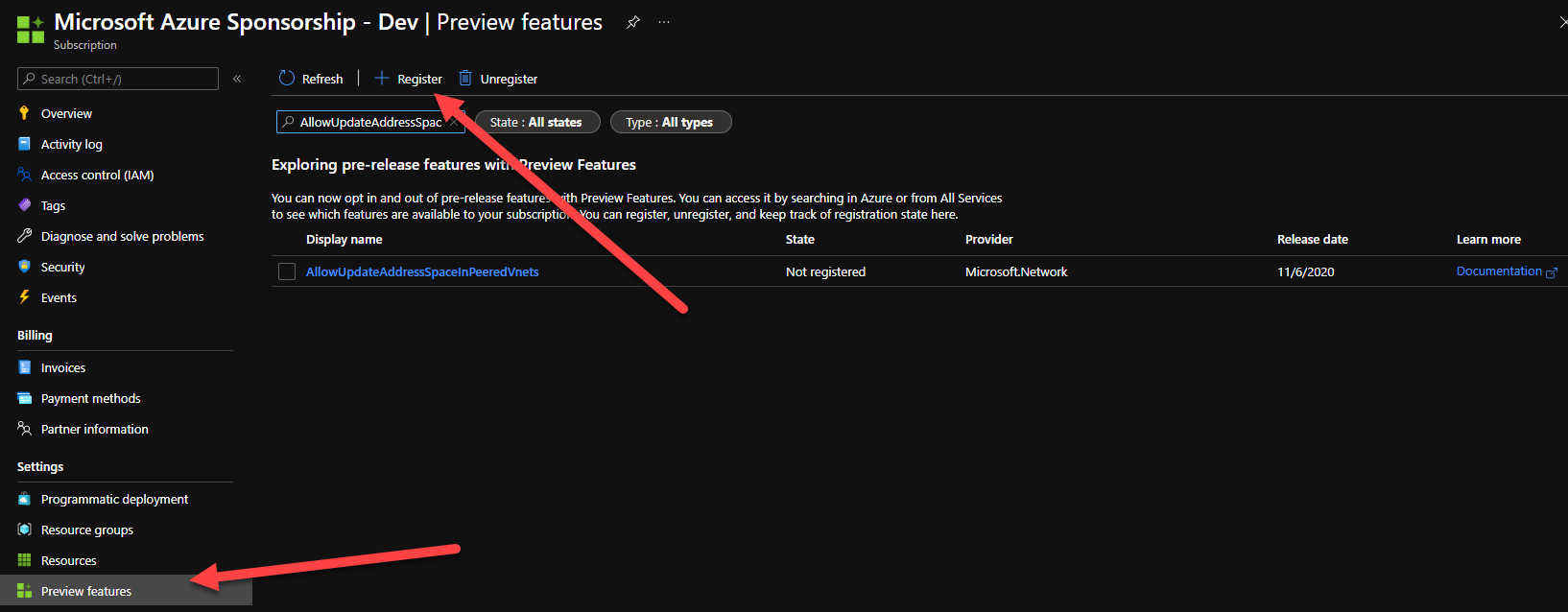
Preview features

After a few minutes, like every provider, the new one is registered:
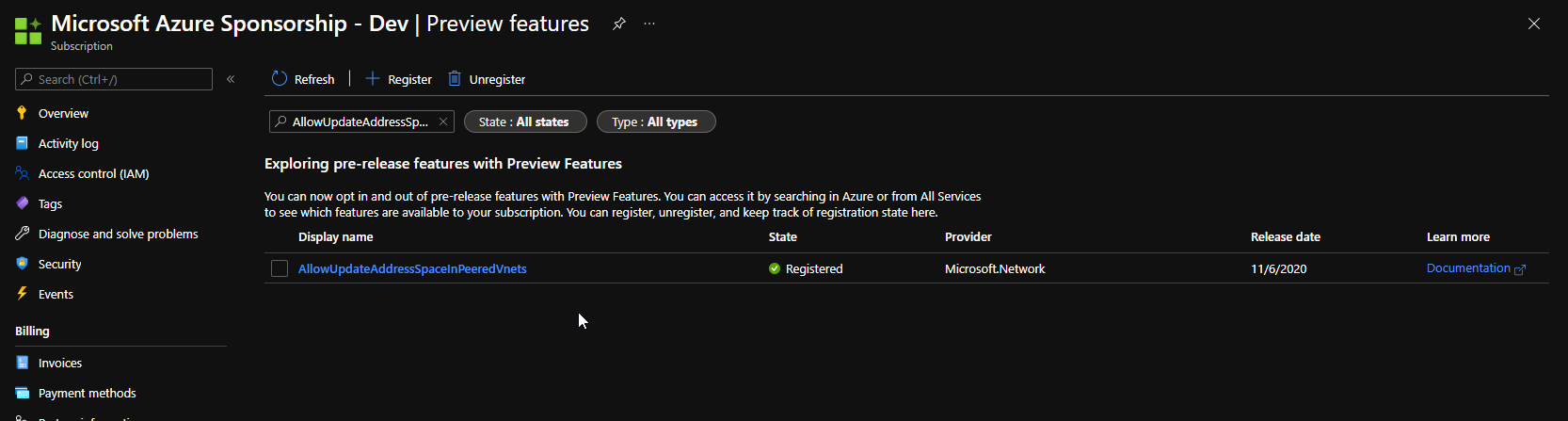
Registered

Let’s now add a new address space range in our peered VNet:
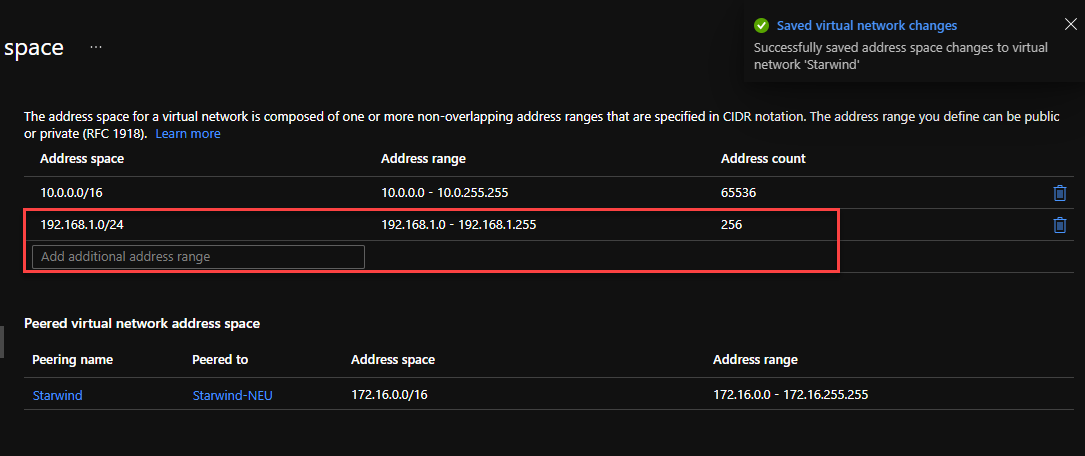
 Add a new address space

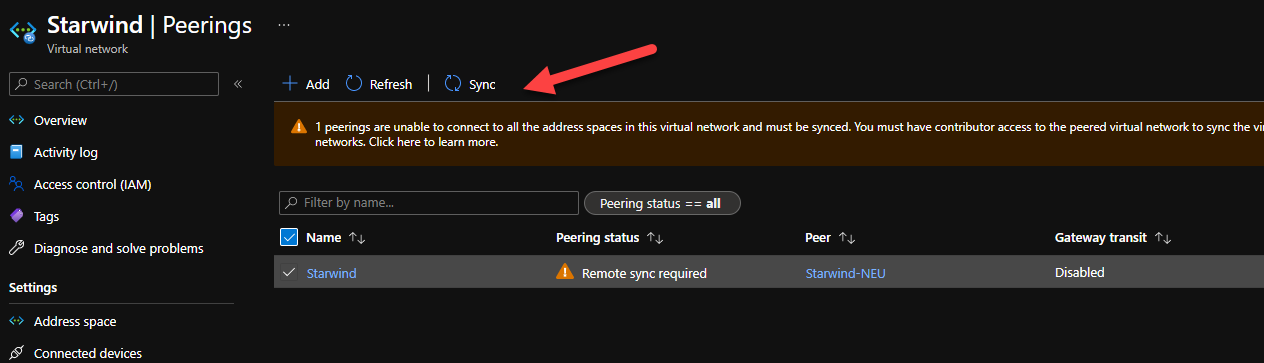
If you now go to your peering, you will have a message that you need to sync the partner, to be able to route the traffic for the new subnet:
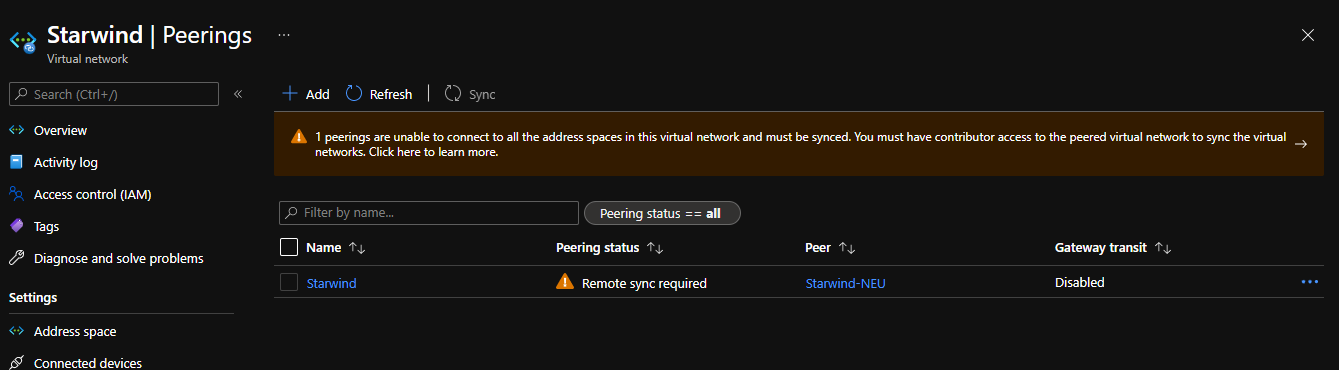
Peering

Select it and click on Sync:

Sync

After a few seconds, you can see that the status changed:
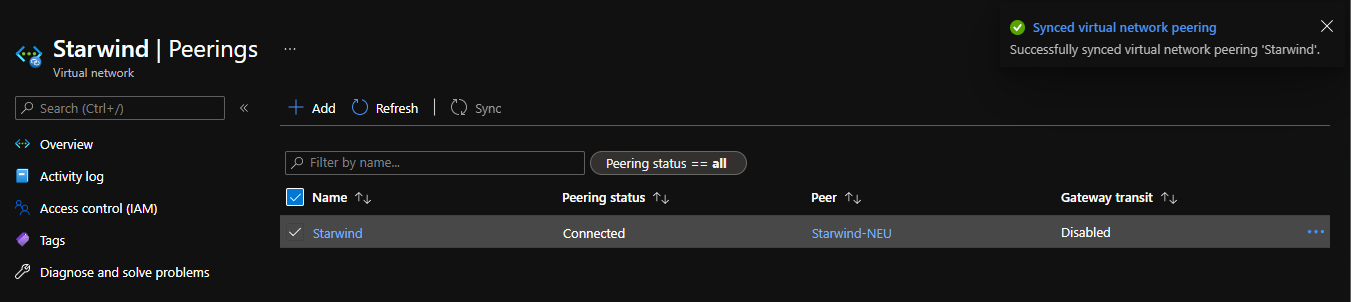
The status changed

You can now contact IP addresses in the new subnet from peers.

Hey! Found Florent’s article helpful? Looking to deploy a new, easy-to-manage, and cost-effective hyperconverged infrastructure?
Alex Bykovskyi
Alex Bykovskyi StarWind Virtual HCI Appliance Product Manager
Well, we can help you with this one! Building a new hyperconverged environment is a breeze with StarWind Virtual HCI Appliance (VHCA). It’s a complete hyperconverged infrastructure solution that combines hypervisor (vSphere, Hyper-V, Proxmox, or our custom version of KVM), software-defined storage (StarWind VSAN), and streamlined management tools. Interested in diving deeper into VHCA’s capabilities and features? Book your StarWind Virtual HCI Appliance demo today!