StarWind provides its users with synchronous and asynchronous replication that can be quickly configured with an easy-to-use Replication Manager.
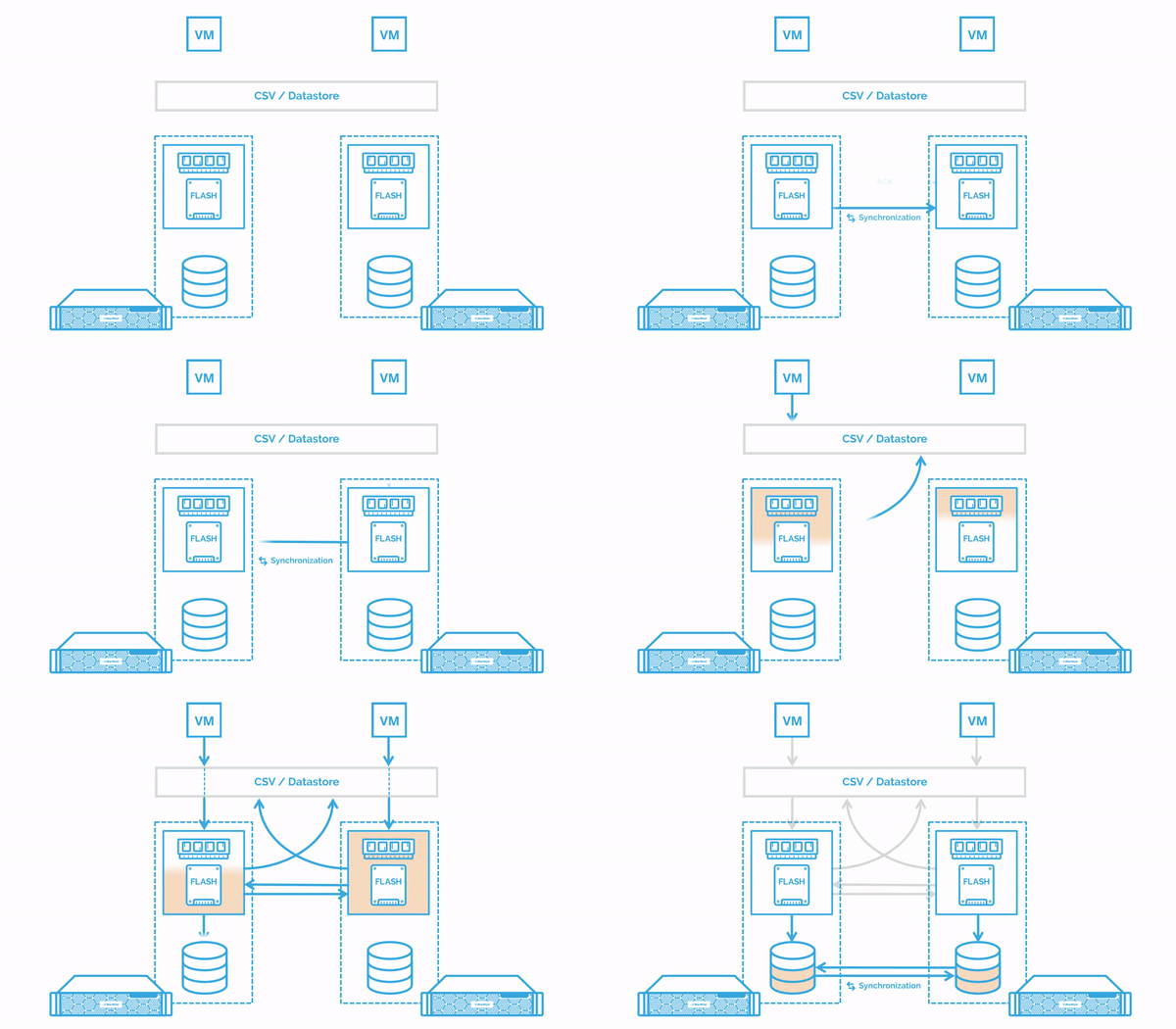
Synchronous replication ensures real-time synchronization and load balancing of data between two or three cluster nodes that work in a fully active-active mode. Such a configuration tolerates the failure of two out of three storage nodes and enables the creation of an effective business continuity plan. Technically, with synchronous mirroring, each write operation requires control confirmation from both storage nodes. It guarantees the reliability of data transfers but is demanding in bandwidth (mirroring will not work on high-latency networks).
The picture below demonstrates how replication works with cache enabled:
Asynchronous replication is important for off-site data protection, business continuity, and disaster recovery - it allows copying mission-critical data over a WAN to a secure remote location. This data can be recovered within a short recovery period with minimal disruption. With asynchronous replication, confirmation from each storage node is not required during the data transfer. Asynchronous replication does not guarantee data integrity in case of storage or network failure; hence, some data loss may occur, which makes asynchronous replication a better fit for backup and disaster recovery purposes where some data loss is acceptable.
Learn more: